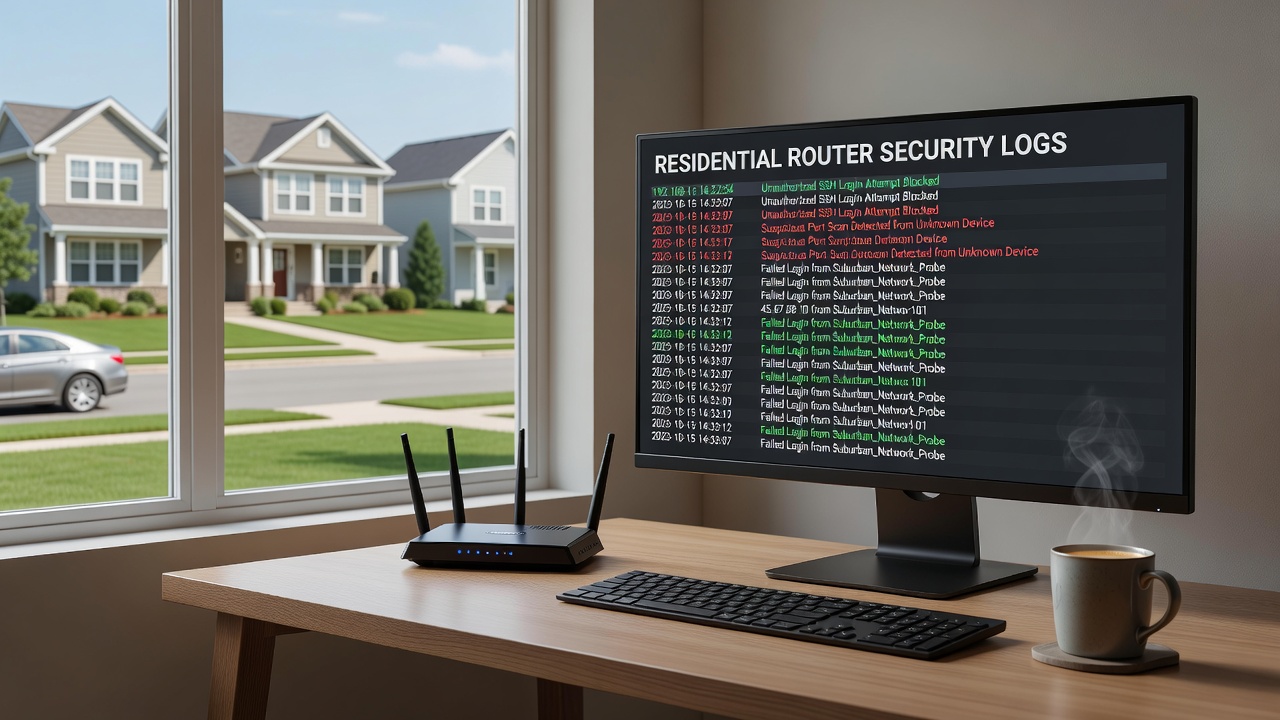
What Residential Router Logs Reveal About Unauthorized Access Attempts in Suburban Neighborhoods
Router logs in residential settings capture sequences of connection attempts, authentication failures, and packet flows that point to external probes directed at home networks. These records include timestamps, source IP addresses, destination ports, and protocol types, which together form patterns that security analysts examine when reviewing suburban neighborhoods where multiple households operate similar consumer-grade equipment. Data collected across distributed residential zones shows repeated targeting of common ports such as 22, 23, 80, and 443, along with administrative interfaces left exposed by default configurations.
Patterns Recorded in Standard Router Logs
Residential devices from major manufacturers maintain logs that list failed SSH or Telnet login events, repeated HTTP requests to management pages, and UDP scans that sweep entire address blocks. Observers note clusters of activity originating from overseas autonomous systems, with spikes occurring during evening hours when residents return home and devices remain powered on. Studies conducted through September 2026 indicate that suburban blocks experience higher volumes of these probes compared with rural areas, largely because broadband providers assign contiguous IP ranges that attackers enumerate through automated scripts.
Logs frequently document sequences where an initial SYN packet arrives, followed by multiple connection resets within seconds, and then a shift to different ports on the same target address. This behavior aligns with reconnaissance tools that test for open services before attempting credential stuffing or firmware exploits. Analysts examining logs from multiple households in one neighborhood often identify overlapping source addresses, suggesting coordinated scanning campaigns rather than isolated incidents.
Geographic and Temporal Trends in Suburban Areas
Suburban developments built within the last decade commonly share similar router models supplied by local internet service providers, which creates consistent vulnerability surfaces across adjacent properties. Log reviews reveal that access attempts increase after firmware update cycles when new vulnerabilities become public, with peaks documented in late summer and early fall months. Evidence from network monitoring projects shows that neighborhoods with higher percentages of remote workers maintain longer uptime windows, thereby extending the observation period for these external probes.
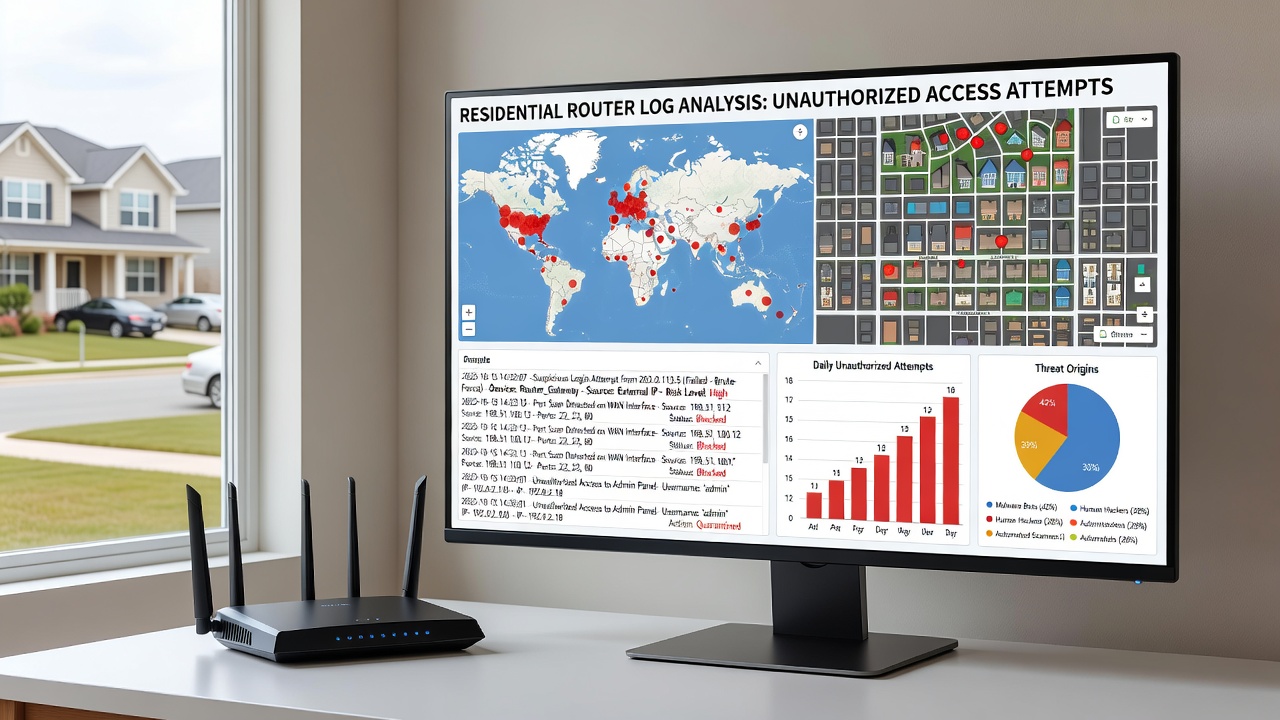
Time-series analysis of logs collected from one suburban county in 2025 and 2026 demonstrates that Wednesday and Thursday evenings record the highest frequency of brute-force attempts against router administrative interfaces. Source IPs often rotate through ranges associated with compromised residential or business devices located in other countries, which complicates attribution but still leaves clear signatures in destination port sequences and payload sizes.
Types of Access Attempts Documented
Router logs distinguish between simple port scans that generate no response and more persistent efforts that include dictionary attacks against default usernames. Entries show repeated attempts using common credential pairs such as admin/admin or user/password, followed by protocol-specific probes once a service responds. Some logs capture malformed packets designed to trigger buffer overflows in older firmware versions still running on consumer hardware.
Additional indicators include DNS queries that precede direct connection attempts and sudden increases in outbound traffic after an initial inbound probe succeeds in establishing a session. These sequences appear more frequently in neighborhoods where residents have not changed default passwords or enabled automatic security updates provided by the manufacturer.
Comparative Data from Broader Monitoring Efforts
According to reports published by the European Union Agency for Cybersecurity, residential routers represent a growing share of devices appearing in global botnet recruitment statistics. Parallel findings from Australian Signals Directorate monitoring programs confirm that suburban IP blocks attract consistent scanning activity regardless of the specific broadband provider serving each area. Researchers tracking these trends note that the volume of failed authentication events per household can exceed several hundred per week during active campaign periods.
Conclusion
Router logs therefore supply a factual record of external interaction attempts that security teams and network operators review when assessing exposure levels across suburban residential networks. The combination of timestamped entries, protocol details, and source information allows identification of recurring patterns without requiring advanced forensic tools. Continued collection of these logs through periods such as September 2026 supports ongoing analysis of how access attempt volumes correlate with neighborhood demographics and device update practices.